
Bat Unit Study
Every time we go to the zoo, we love visiting the bat cave. It’s so fun to watch the bats up close and see them hanging upside down. Bats are fascinating creatures and important to our environment. Unfortunately, they often get a bad rap. This mini bat unit study will hopefully add some fun and whimsy to your schooling while teaching your students the importance of making sure bats have a home with us in our outdoor environment.

Are Bats Birds?
No bats are not birds, they are the only flying mammals on earth.
Where do Bats live?
Bats like to be warm and cozy just like we do. They can hide out just about anywhere that allows them to live comfortably and have a food source nearby.
1. Caves and Crevices
Many bats like to hang out in dark caves and crevices during the day. These places provide them with shelter and protection from predators.
2. Trees and Forests
Some bats prefer to roost in trees and forests. They can hang upside down from tree branches, which is pretty handy for resting.
3. Buildings
Believe it or not, bats sometimes make their homes in old buildings and even under bridges! They find nooks and crannies to sleep during the day.
What do Bats look like?
Bats have special features that help them fly and find their way in the dark. They have wings, just like birds, but their wings are made of a thin skin called a membrane. They use their keen senses, like echolocation, to find food and avoid obstacles in the dark.
Grab this mini literature unit
How many different types of Bats are there?
There are more than 980 different types of bats. Some are tiny, like the bumblebee bat, and others are quite big, like the flying fox. Bats can have fur of various colors, from brown and gray to even bright red and yellow!
Types of Bats
Bats come in all shapes and sizes, just like superheroes with their unique powers. There are over 1,400 species of bats around the world! But don’t worry, we won’t go through them all. Let’s check out some of the most interesting types.
1. Fruit Bats
Fruit bats, also known as flying foxes, are like the gardeners of the night. They love to chow down on fruits, especially the ones with sweet nectar. These bats are usually pretty big and have large eyes and pointy ears. Fruit bats live in warm, tropical places and are known for helping spread seeds, which is super important for our environment!
2. Insect-Eating Bats
Imagine being able to eat your body weight in insects every night – that’s what insect-eating bats do! They’re like nature’s pest control team. With their super-sensitive ears and echo-location skills (more on that later), they can catch insects in mid-air. These bats live all over the world and can be found in forests, caves, and even your own backyard!
3. Vampire Bats
Now, these bats might sound a bit spooky, but they’re not as scary as they seem in movies. Vampire bats are the only bats that feed on blood. But don’t worry, they don’t suck human blood! They usually drink from other animals, like cows and birds. These bats live in Central and South America and have some incredible adaptations to find their food.
What do Bats Eat?
Fruits and Nectar
Fruit bats have a sweet tooth for fruits and nectar. They use their keen sense of smell to find the yummiest treats in the night.
Insects Galore
Insect-eating bats are like ninja bug hunters. They use echolocation, which is like sonar, to detect tiny insects in the dark. Then, they swoop down and munch them up! Each night bats eat about half their weight in insects, which helps control pesky insects like mosquitos.
A Little Bite of Blood
Vampire bats, as the name suggests, feed on blood. They have sharp teeth that make a tiny cut in their prey and then lap up the blood. But don’t worry, they only target animals, not humans!
Stellaluna Literature Study
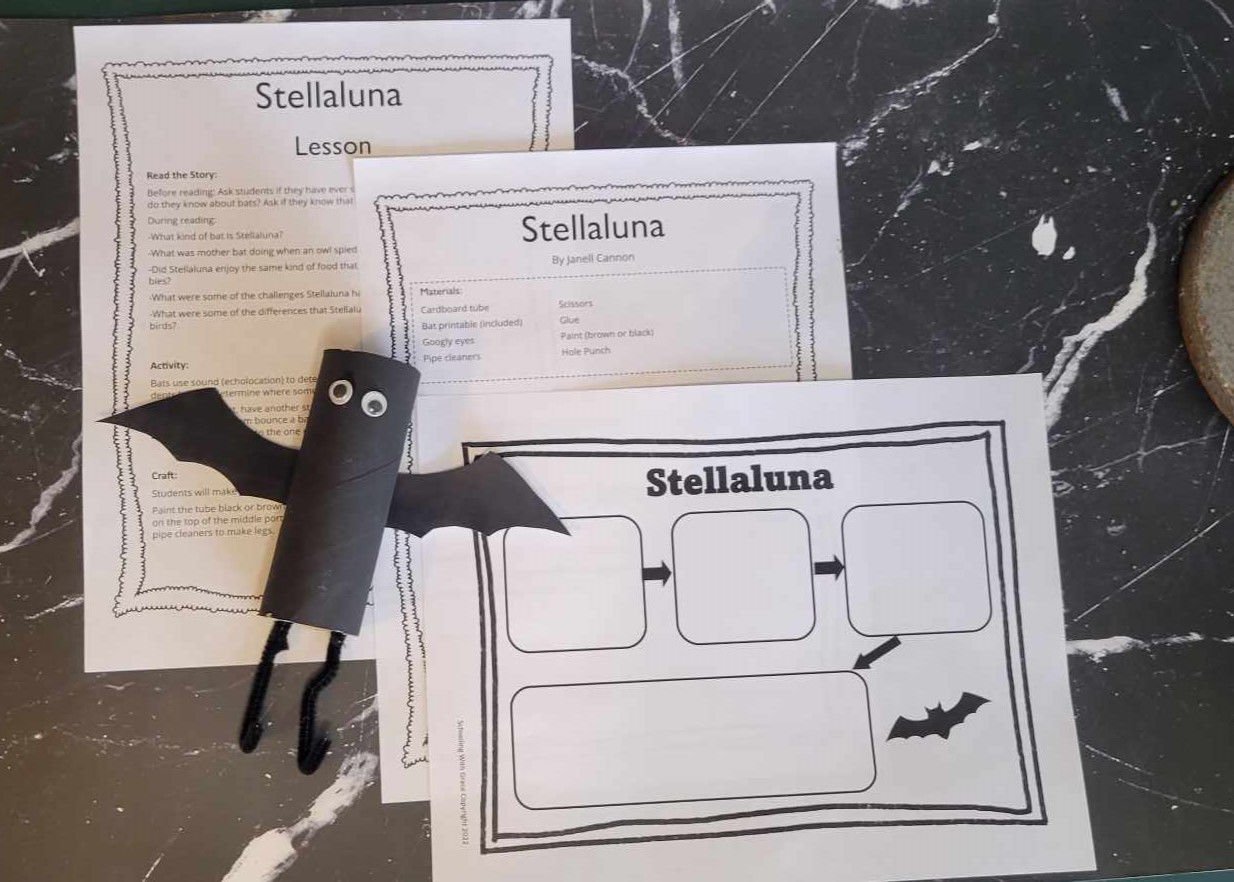
Introduce your students to the sweet story of Stellaluna the fruit bat that was separated from her mama and taken in by a family of birds. Literature questions and a fun bat activity go along with this unit as well as this cute bat craft and to help students organize the story this story map is included. Stellaluna Literature Study

Related: Looking for more literature book related studies? Check out Lemonade and Tales
Bat Craft
Have fun with your students creating this bat craft with easy-to-follow instructions and minimal materials.
Books about Bats


Other Great Bat Resources

Angela is the Homeschool Encourager for the Overwhelmed & Under-Caffeinated and the Chaos-to-Confidence Specialist behind Schooling with Grace. With a no-fluff approach, a dash of humor, and a whole lot of heart, she helps homeschool moms cut through the chaos, ditch unrealistic expectations, and teach with confidence.