
Hands-On Preschool Habitat Activity: Animal Habitat Sorting Game
Most preschool habitat lessons look cute on Pinterest… but they rarely help kids understand what a habitat actually is.
Kids glue animals onto random worksheets, color a forest scene, or watch a quick video about penguins and camels. It feels educational, but when you ask a child where a polar bear lives a few minutes later, the answer is often “the zoo.”
The issue isn’t the animals.
It’s that most activities don’t help kids categorize environments in a way their brains can process.
Preschoolers learn best when they can physically sort and group things.
That’s why habitat sorting activities work so well — when they’re done the right way.
As an Amazon Associate, we earn from qualifying purchases. This site contains affiliate links see my disclosure here:
The Real Goal Isn’t Memorizing Animals
Many parents approach habitat lessons like a quiz:
- Camels live in the desert
- Sharks live in the ocean
- Owls live in the forest
But preschool learning isn’t about memorizing facts.
It’s about building mental categories.
Instead of teaching individual animal facts, the goal is helping children recognize patterns like:
- Hot and sandy → desert
- Cold and icy → polar
- Lots of trees → forest
- Water environment → ocean
When kids sort animals themselves, they start noticing these patterns naturally.
That’s when the concept of habitats actually clicks.
The “Sort → Talk → Reinforce” Method
When using habitat printables with preschoolers, the activity works best when you follow a simple three-step teaching method.
Step 1: Sort (Hands-On Learning)
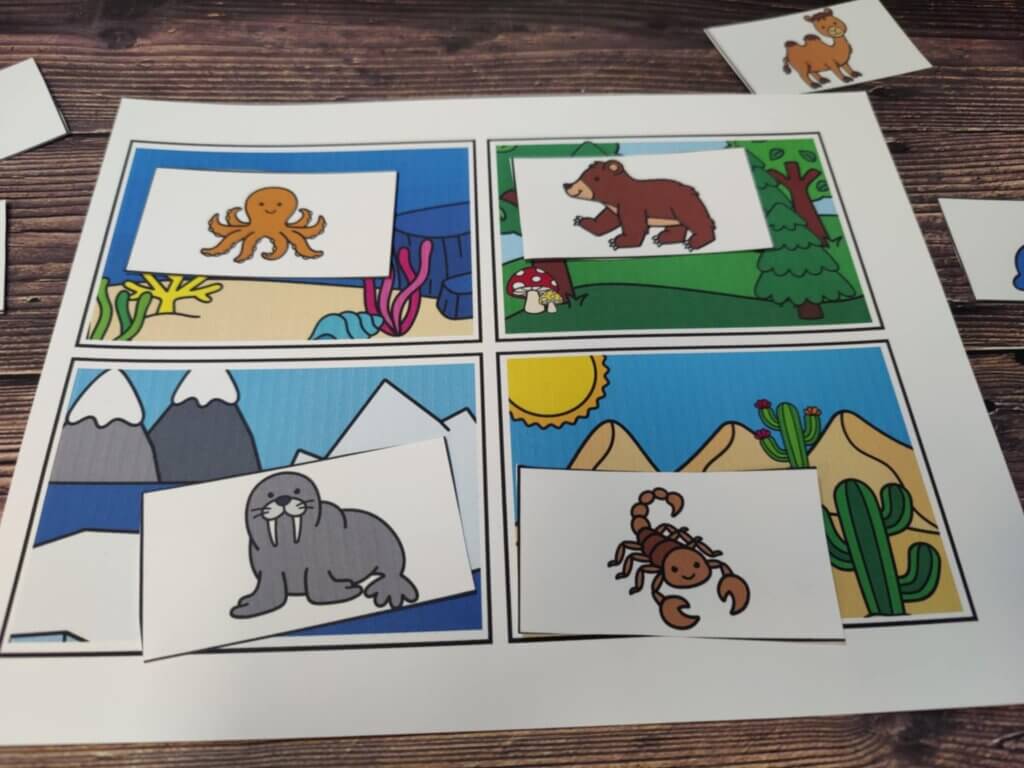
Give the child a set of animal cards and four habitat categories:
- Desert
- Ocean
- Forest
- Polar / Arctic
Let them place each animal where they think it belongs.
Don’t correct immediately. The goal is exploration.
Related Post: Preschool Sorting Big and Small Ocean Animal Activity
Step 2: Talk (Build Understanding)
Once animals are placed, ask simple guiding questions:
- “Is this place hot or cold?”
- “Is there water here?”
- “Are there lots of trees?”
This helps kids connect environment clues to the animals.
Example:
“Why do you think the polar bear lives in the Arctic?”
Step 3: Reinforce (Make the Learning Stick)
After sorting, reinforce the concept through:
- Storybooks about animals
- Repeating the sorting activity later
- Asking questions during everyday life (“Is a camel a forest animal?”)
Repetition helps the categories stick.


4. Real-World Application: What This Looks Like With a Preschooler
Here’s what typically happens when you try this activity in real life.
A child might put:
- Penguins in the ocean
- Bears in the desert
- Camels in the forest
And that’s completely normal. This is where the learning happens. Instead of correcting them right away, try asking:
“Would a polar bear feel warm or cold in the desert?”
Most kids quickly realize the mismatch. That small moment of discovery is far more powerful than simply telling them the answer. It turns a worksheet into an actual thinking activity.
The Printable Habitat Sorting Activity
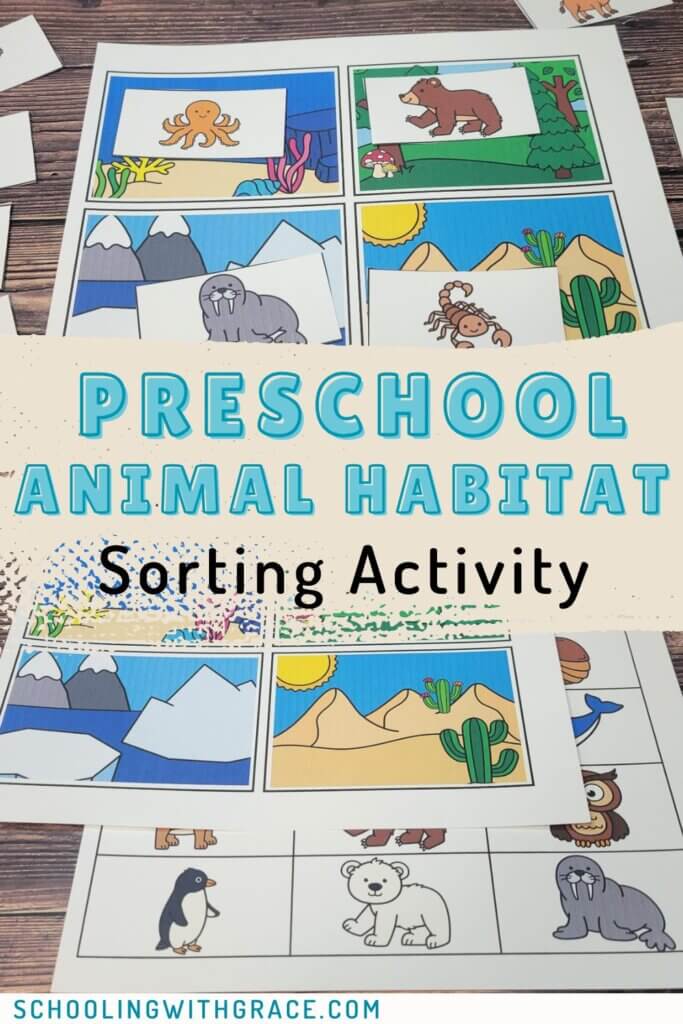
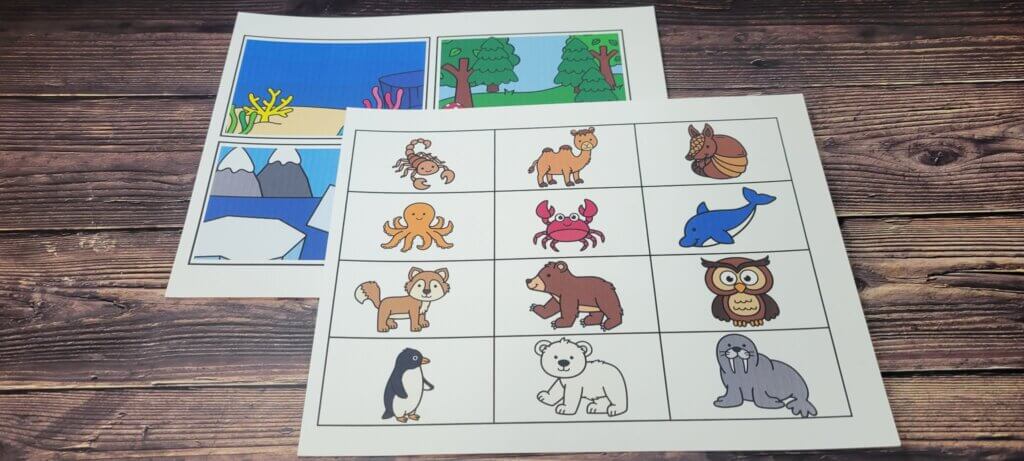
If you’d like a ready-to-use version of this activity, I created a Preschool Animal Habitat Sorting Printable that includes:
- Four habitat mats (desert, ocean, forest, polar/arctic)
- Animal sorting cards
- Simple visuals designed for preschool learners
You can print it, cut out the animals, and start the activity in just a few minutes.
Perfect for:
- Preschool learning at home
- Homeschool science units
- Classroom centers
- Rainy-day learning activities
Do you want this Download? Click Below!


Angela is the Homeschool Encourager for the Overwhelmed & Under-Caffeinated and the Chaos-to-Confidence Specialist behind Schooling with Grace. With a no-fluff approach, a dash of humor, and a whole lot of heart, she helps homeschool moms cut through the chaos, ditch unrealistic expectations, and teach with confidence.