
Teaching Children To Rhyme
Rhyming might seem like child’s play, (I can remember jump roping on the playground to Miss Mary Mack) but it plays an important role in developing crucial language skills that pave the way for reading and writing. Some children catch on right away and some need a little extra help, so I want to offer some tips on teaching children to rhyme when they just don’t “get” it.
This post probably contains affiliate links. If you make a purchase through any of them, I get a small commission at no cost to you, and you get a great deal. See my disclosure policy here.
Why Do Children need to know how to Rhyme?
Rhyming is not just about creating cute, sing-song verses, students that know how to rhyme will have a stronger foundation in reading. It’s a fundamental aspect of phonemic awareness, which is the ability to identify and manipulate individual sounds (phonemes) in spoken words. When children learn to recognize and generate rhyming words, they develop a deeper understanding of the sounds that make up words. This, in turn, makes it easier for them to decode and encode words while reading and writing. When they can identify patterns in words it helps them to decode faster and therefore be stronger readers. Knowing how to rhyme is often an indicator of future reading success.
How to Teach Rhyming:
Read: And I mean read a lot!
There are some pretty fantastic rhyming books out there. You can’t walk into the children’s section of a library or bookstore and throw a stone without hitting a rhyming book! Grab a few and when you sit down and read with your child, point out the words that rhyme or ask them if they can identify any.
Oftentimes rhyming books a have rhythm to them that makes rhyming easy to identify. The repetition of the rhymes will soon become apparent and your child will find themselves predicting the next rhyme.
Here are a few of our very favorite Rhyming Books.


Seriously y’all, Even though I’m talking about Rhyming here, I have quoted to my children more lines from the Pout Pout Fish than just about any other book outside of the Bible. I sure hate it when my kids start “spreading the weary drearies all over the place.”
Use Nursery Rhymes:
Nursery Rhymes are filled with rhyming words and they are easy to remember. They are short and can easily be taught. Nursery Rhymes have been proven to help develop cognitive thinking, and help develop strong reading and spelling skills. They also help to develop listening skills as students work to distinguish between different sounds and rhythms in the story.
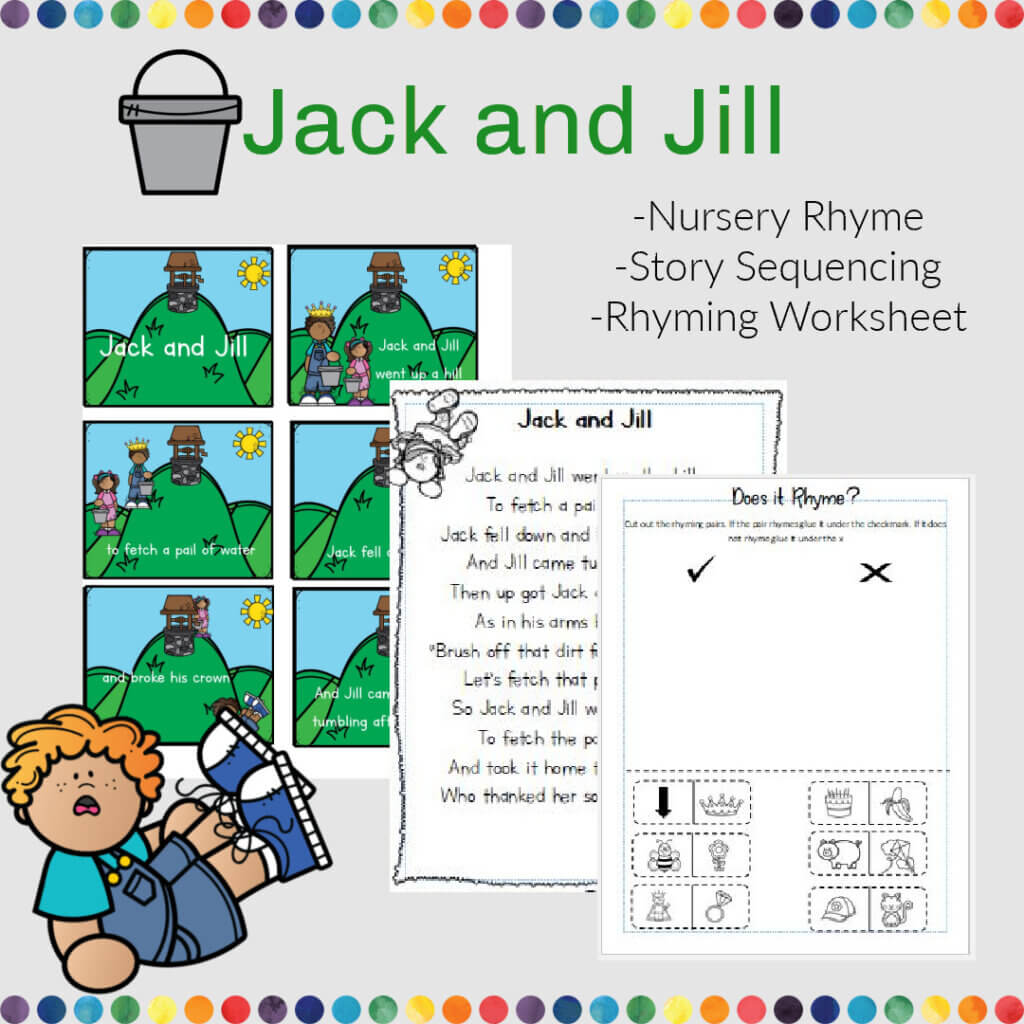
Help your student see the rhyming pattern in nursery rhymes by reading through the rhyme and first seeing if they can point out the rhymes themselves. Then you can show them the word and have them guess what might come next. Using something like the story sequencing chart included in this free printable, have students retell the story making sure they include the rhyming words.
Grab this FREE Jack and Jill Nursery Rhyme Set
Play Games or use Manipulatives:
Being able to actually touch cards or manipulatives while they say the rhyme further strengthens their learning because multiple senses are being used as they touch and say the words.
We love these Rhyming puzzles and these adorable little snap and rhyme pups.


Sing Songs
If you want to get some wiggles out and practice rhyming as well, Then Jack Hartmann is going to be your guy! The videos are cheesy but he is well loved in the education world.
There are so many fun silly songs that help practice rhyming. Do a YouTube search for Songs that Rhyme or grab one of these silly song CD’s.




If your child is struggling to master rhyming words- don’t move on until they do. While most students pick up on the patterns in rhyming words right away, some need extra time. If your student is one of those, slow down and take time to really understand this concept before moving on.

Angela is the Homeschool Encourager for the Overwhelmed & Under-Caffeinated and the Chaos-to-Confidence Specialist behind Schooling with Grace. With a no-fluff approach, a dash of humor, and a whole lot of heart, she helps homeschool moms cut through the chaos, ditch unrealistic expectations, and teach with confidence.