
Arctic Animal Memory Match Game
Preschoolers are naturally curious about animals—especially animals that live in extreme places. Seals waddling, polar bears stomping through the snow, and puffins flying over icy water instantly grab their attention, which is why activities like an arctic animals memory match game work so well for early learners. When children can see, touch, and play with the animals they’re learning about, the concepts feel exciting instead of overwhelming.

The key with preschoolers isn’t memorization or long lessons—it’s play, repetition, and meaningful conversation. When learning feels like a game, kids stay engaged longer and absorb more than we often realize. With just a few simple, low-prep activities, you can build early science knowledge, vocabulary, and cognitive skills—all while keeping learning fun and stress-free.
Let’s take a look at how to teach Arctic animals in a developmentally appropriate way and explore easy, hands-on ideas you can use to extend the learning at home or in the classroom.
Why Teach Arctic Animals in Preschool?
Arctic animals naturally support early childhood learning goals without feeling academic. When preschoolers learn about animals that live in cold climates, they’re practicing:
- Language development (naming animals, describing features)
- Cognitive skills (sorting, matching, memory)
- Early science concepts (habitats, weather, survival)
- Listening and conversation skills
You don’t need to explain latitude or climate zones. At this age, it’s enough for children to understand: “These animals live in very cold places”
That simple idea lays the groundwork for deeper learning later—without overwhelming little learners.
Teaching Arctic Animals Through Play (Not Worksheets)

One of the easiest ways to teach Arctic animals is through games that invite interaction, like memory matching.
A memory game helps preschoolers:
- Strengthen visual memory
- Practice turn-taking
- Recognize and name animals
- Build focus and attention
Memory games are a great way to build focus, turn-taking skills, and visual discrimination in young learners. If your child enjoys this activity, you can also try our Fall Animal Memory Matching game to reinforce the same skills with a seasonal theme.
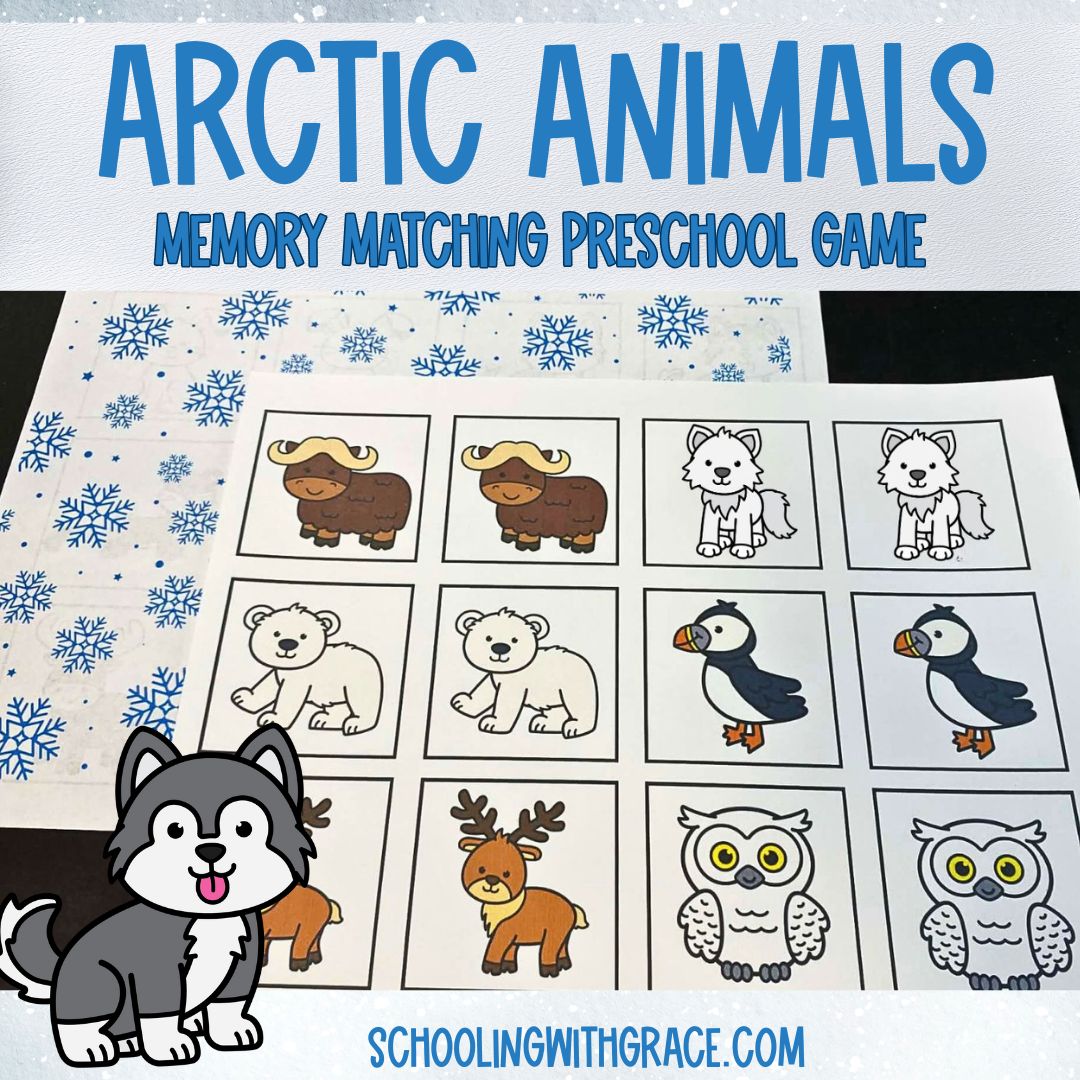
This Arctic Animal Memory Match printable is a perfect example of this kind of learning. The cards feature clear, friendly illustrations of Arctic animals such as polar bears, reindeer, puffins, and more, designed specifically for young children
How to use it with preschoolers:
- Start with just 4–6 pairs instead of the full set
- Name each animal out loud before playing
- Keep rounds short and celebratory
- Focus on fun, not “winning”
This turns the activity into a relaxed learning moment rather than a test—and that’s exactly where preschool learning thrives.
Arctic Animal Extension Ideas
Once your child is familiar with the animals, extending the learning is easy—and doesn’t require buying more curriculum.
Movement & Gross Motor Play
- Move like the animals (waddle like a penguin, stomp like a polar bear)
- Freeze like an Arctic animal when music stops
Art & Sensory Activities
- Paint Arctic animals using white and blue paint
- Create “snow” with cotton balls or baking soda sensory bins
- Build an icy habitat using blocks and toy animals
Literacy & Conversation


- Read Arctic-themed picture books
- Ask open-ended questions:
- “Which animal do you like best?”
- “Which one lives in the water?”
- “Which animal has thick fur?”
Cognitive Extensions
- Sort animals by size or color, Sorting activities are another easy way to build early math and thinking skills. For more practice, your preschooler may also enjoy our Ocean Animal Size Sorting activity, which helps children compare and order animals by size.
- Use the memory cards for:
- “Find the penguin”
- “Which animal swims?”
- “Which animal has wings?”
These activities help reinforce vocabulary and concepts without adding pressure or prep time.
Resources to Support Your Arctic Animal Unit
If you want a simple, print-and-play resource that supports all of the skills above, the Arctic Animal Memory Match makes a great addition to your preschool routine.
It’s:
- Easy to prep
- Flexible for different ages
- Play-based and screen-free
- Perfect for quiet time, morning baskets, or center work
To expand your Arctic animal unit even further, pair the memory match game with Arctic Animal Flashcards to introduce vocabulary, practice animal names, and support early language development.
You can grab it as a free opt-in and start using it immediately—no lesson plans required.

Angela is the Homeschool Encourager for the Overwhelmed & Under-Caffeinated and the Chaos-to-Confidence Specialist behind Schooling with Grace. With a no-fluff approach, a dash of humor, and a whole lot of heart, she helps homeschool moms cut through the chaos, ditch unrealistic expectations, and teach with confidence.