
How to Write a Friendly Letter
We begin to teach students how to write a friendly letter in kindergarten and then continue to build on that skill as they move up in grades. Every student understands the concept of receiving mail and we all know the excitement of getting something personal in our mailbox from a friend or relative. Teaching letter writing is quickly becoming obsolete in our tech driven world but the importance of understanding written communication and being able to form complete thoughts on paper is still important today.

What is a Friendly Letter?
Friendly letters are different than business letters because they take on a more informal tone in the writing. Friendly letters are usually written to people that we know such as relatives, friends and peers. They take on a more conversational tone as they typically discuss everyday things, share about personal news and ask questions of their readers.
What are the parts of a friendly letter?
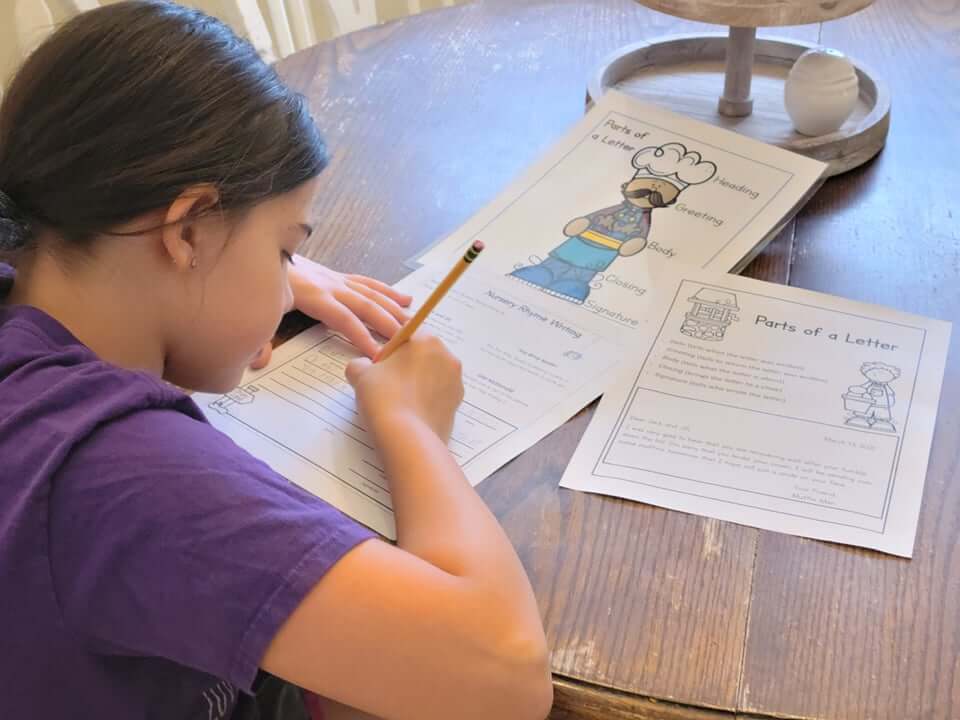
There are 5 parts of a friendly letter. Each part has a purpose and should be included in the letter.
- The heading of the friendly letter goes in the upper left-hand corner of the page. This can include, the street address, followed by the name of the city or town, and the state and zip code. After that you write the date the letter was written, starting with the day, followed by the month, and then the year. –Not all friendly letters include the address. Also, important to note that the date is often times seen in the top right of the letter as well.
- The greeting includes the name of the person to whom the letter is written. It usually begins with “Dear, hello or hi” and is placed on the left-hand side of the paper under the heading. A comma or another form of punctuation like an exclamation point comes after the person’s name.
- The Body of the letter is everything that the sender wants to say to the recipient. It goes below the greeting and is written in paragraph form. If it is a short letter with only one subject being discussed, then only one paragraph is needed.
- The Closing is an expression of feeling and is often ended with the words: sincerely, yours truly, your friend, love, best wishes. It begins with a capital letter and is followed by a comma.
- The Signature identifies the author of the letter and comes after the closing. It is usually written in cursive.
Friendly Letter Template for Kids

Get students excited about writing by giving them a reason to write a friendly letter. Use the following ideas to help students get started writing and if you need some ideas, use the friendly letter format below as a jumping off point.
Ideas of Friendly Letters to write:
- Write a letter to your grandparents telling them about what has been happening at home.
- Write a letter to your best friend about the last movie you watched.
- Write to your favorite teacher and let them know how much you appreciate them.
- Send a letter to someone you look up to and let them know why.
- Write a letter to your past self and share with them something you wish they knew.
Books and Resources for Teaching letter Writing
Make letter writing more fun with these books and stationary paper.



Videos about Writing a Letter
Enhance your students learning about writing letters with this video from the US Postal Service.
Grab your own Friendly Letter templates here to help your students learn the parts of a letter and get started with their own.
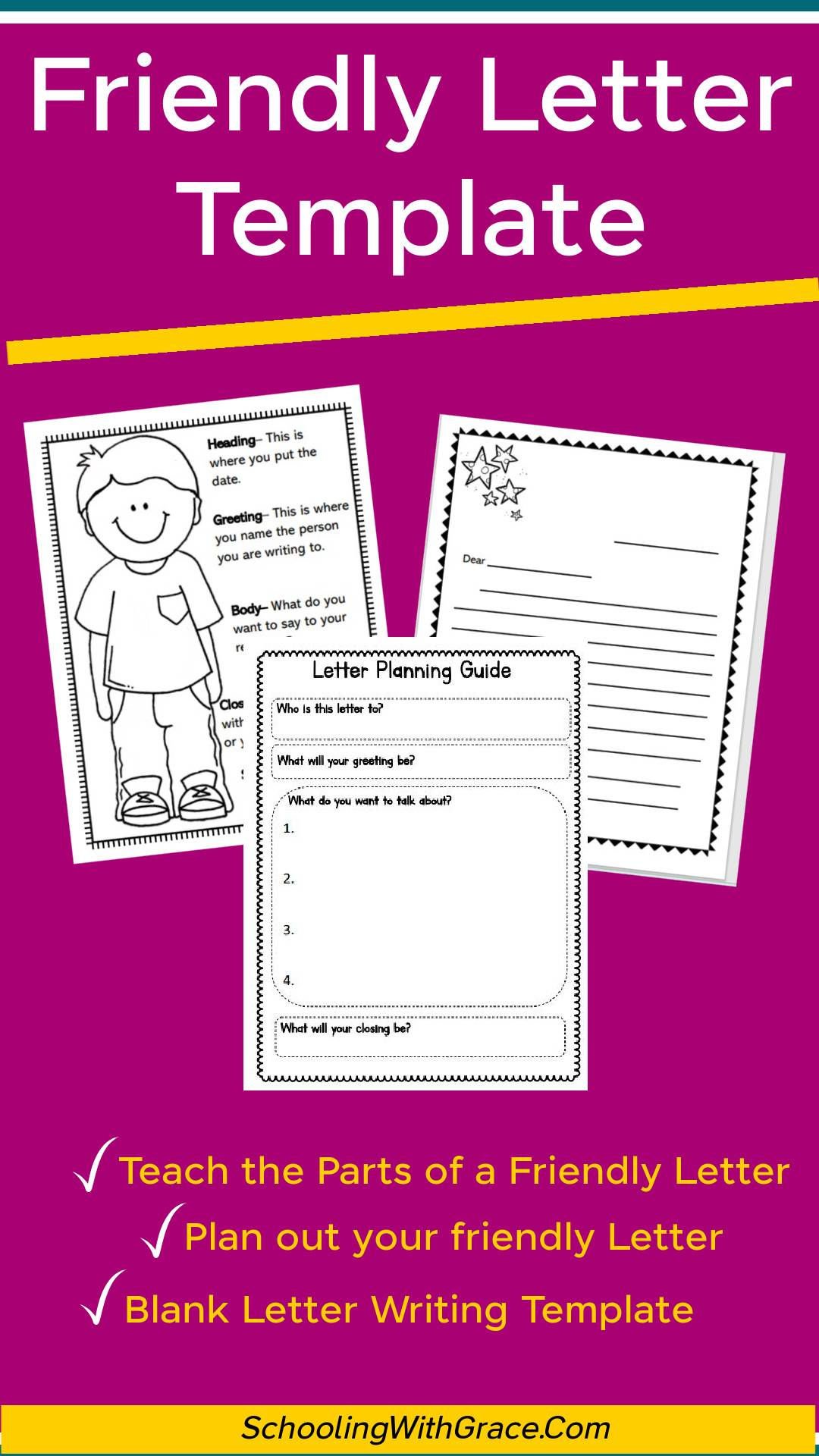
Looking for more Friendly Letter Writing Resources?
Valentine’s Day Letter Writing Template
How to write a Friendly Letter to Santa
Check out The Friendly Letter with Nursery Rhymes.


Angela is the Homeschool Encourager for the Overwhelmed & Under-Caffeinated and the Chaos-to-Confidence Specialist behind Schooling with Grace. With a no-fluff approach, a dash of humor, and a whole lot of heart, she helps homeschool moms cut through the chaos, ditch unrealistic expectations, and teach with confidence.
I would love a friendly letter in the mail