
What does a Homeschool Co-op Schedule Look like?
If you are a homeschool leader, then you have a lot of decisions to make. Hopefully you are making them with your team and not alone, I talk about the importance of that here. Depending on the type of homeschool group you run, your schedule will look different. So if you are here asking “What does a homeschool co-op Schedule look like?” I’m going to give you some general guidelines and offer suggestions for what might work for your group based on the type and culture of the people you are trying to serve.

Consider the Type of Homeschool Group
Is your homeschool group a nature study group that will meet outdoors, or is it one that will meet indoors? Do you spend your time as a whole group doing activities or do you break up into smaller groups? Are you in a traditional type of classroom or do you meet in a large meeting space? Understanding this is the first step to working out how your homeschool group schedule will work. Will everyone move through your time together at the same time or at different times?
How often should a Co-op meet?
If we are talking about a true co-op where parents all come together cooperatively to teach classes, then most likely your group is only meeting 1x-2x a week. This allows parents and students to benefit from the group while still having enough time during the week to homeschool their children at home.
What days of the week should you schedule your Co-op?
Any day of the week will work! A few things to consider as you are scheduling:
- Mondays and Fridays might have the most absences because a lot of homeschoolers use the freedom of homeschooling and plan long weekend vacations.
- Mondays and Fridays might also be the best days because they don’t interrupt the flow of schooling at home.
- Wednesday night is a common church activity night so long homeschool days might not be well received on that day.
- Federal Holidays often fall on Mondays so you will want to plan accordingly.
- The weekends are often considered family time so commitment might be low.
A Relaxed Homeschool Group Schedule
Many outdoor and nature oriented homeschool groups have more of a relaxed schedule. Everyone has a specific time that they are to arrive but the schedule of events could be flexible depending on the culture of the group. Oftentimes depending on the size of the group they might meet together in a large group format for announcements but then split into different groups based on age or interest for the lesson. Or if the group is small, everyone stays together for the lesson and then splits up for exploratory learning.
A typical schedule might look like:
-Arrival Time (this can be set for the morning or the afternoon) parents and students may socialize before getting started for the day. If it is a nature group, the location may change weekly.
-Announcements (during this time, you would give announcements, maybe pray if your group is religious, and set the expectations for the day.
-Lesson
-Exploring (the focus typically being related to the lesson)
-End- It’s possible after the exploration time everyone ends on their own, or there could be a time where everyone is gathered back together and there is a wrap up summary of the lesson.
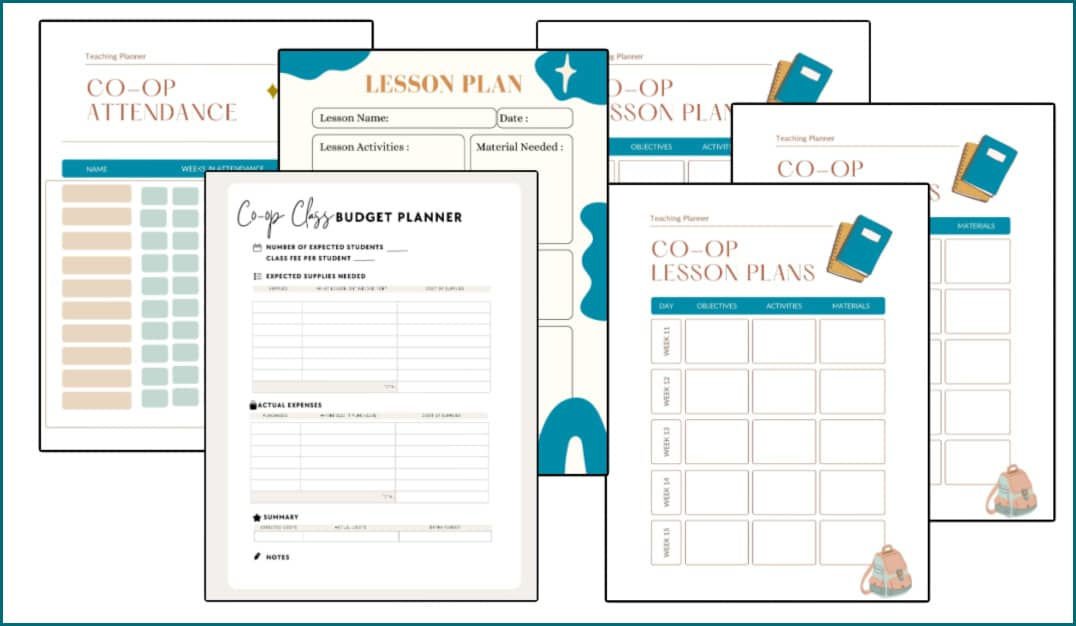
A Traditional Homeschool Co-op Schedule
This kind of schedule is typically what you would see in most homeschool co-ops that meet in a building and parents volunteer to teach classes and help with running the group.
-Arrival of leadership and set up volunteers
-Arrival of Members
Announcement Time/Morning Meeting Time- This could be used not just for announcements but also for prayer, games, socializing, and worship.
Class Time- Class times can vary but a typical class schedule lasts about an hour. You may need to vary times it based on age and grade. Your co-op schedule may include just one class time or as many as you can fit in your school day.
-During the school day, there may be specific times that are set aside for lunch, Socializing, bible study for parents, mentoring hours…etc.
End of Day- Set aside time at the end of the day for clean-up and to get everything put back the way it was before the day began. Especially if you are renting or borrowing space.
Example Homeschool Co-op Schedules
Schedules should be set up in ways that work best for your group.



However you have your homeschool co-op schedule set up, your success will come from how engaged and excited your members are to be there and how organized your leadership team is. If you need some ideas on how to set up a homeschool co-op and put together a team, check out these resources.
Everything you need to know about Setting up a Homeschool Co-op

Angela is the Homeschool Encourager for the Overwhelmed & Under-Caffeinated and the Chaos-to-Confidence Specialist behind Schooling with Grace. With a no-fluff approach, a dash of humor, and a whole lot of heart, she helps homeschool moms cut through the chaos, ditch unrealistic expectations, and teach with confidence.