
A Leaders Guide to Starting a Homeschool Club
If you are a homeschool parent or leader, you are probably looking for ways to expand on your student’s social and academic skills without adding too much extra work to your already full school schedule. Clubs are a great way to incorporate fun experiences and skill development while forging friendships over shared interests. If starting a homeschool club is something you are considering, this guide will get you started on the right track.
Why Start a Homeschool Club?
Very few homeschoolers buy into the idea that our children are missing out on important socialization skills but being part of a club can help build stronger connections and create a sense of community that our children don’t always have the opportunity to do in a homeschool co-op setting or while they are attending youth activities. A few other great reasons for starting a homeschool club include:
- Academic Enrichment: Being able to Explore subjects beyond the homeschool curriculum- sometimes we just don’t have time to take a deep dive into our children’s passions. Clubs can fulfill that need.
- Skill Development: Many clubs like 4H for example have roles that help foster leadership, communication, teamwork, and critical thinking. If you start a club, consider whether that is appropriate for your group.
- Parent Support: Clubs offer a network for sharing resources, ideas, and challenges related to not just the club activities but also homeschooling and parenting in general.
- Fun and Exploration: Make learning fun and open up opportunities to future career choices.
Types of Homeschool Clubs
The sky really is the limit when it comes to the types of clubs you can start. Think of just about any kind of interest or passion that your students have and go from there. Some ideas to consider:

Academic Homeschool Clubs:
- Literature/Book Club: Discuss books, share writing, and explore different genres.
- Science Club: Conduct experiments, go on field trips, and dive into STEM topics.
- History Club: Explore historical periods, visit museums, and reenact events.
- Math Club: Solve puzzles, play games, and tackle challenging problems.
- Foreign Language Club: Practice conversation, learn about cultures, and cook traditional dishes.
- Speech and Debate or mock trial- Sharpen your public speaking, critical thinking, and argumentation skills. Research, write persuasive speeches, and engage in lively debates or simulated courtroom trials.
- Government (teen pact) –Dive into the world of politics and civic engagement. Learn about government processes, explore current issues, and develop leadership skills through interactive simulations and discussions.
Interest-Based Homeschool Clubs:

- Art Club: Create artwork, visit galleries, and learn different techniques.
- Music Club: Play instruments, put together a choir, and attend performances or have a performance.
- Drama Club: Put on plays, improv, host a Night of the Arts, and explore theater techniques.
- Coding/Robotics Club: Learn programming, build robots, and participate in competitions.
- Outdoor/Nature Club: Go hiking, camping, bird watching, and explore the environment.
- Yearbook-Capture memories and showcase school spirit by designing, writing, and photographing for the annual yearbook. Learn about journalism, graphic design, and project management.
- Sewing club– Create custom clothing and accessories. Learn basic sewing techniques, explore different fabrics, and design unique projects that reflect your personal style.
- Knitting/Crocheting Club-Learn the relaxing art of creating beautiful textiles with yarn and needles or hooks. Craft scarves, hats, blankets, and more while building community and creativity.
Are you a Homeschool Leader? Join my Newsletter for helpful tips and Resources.
Service Based Homeschool Clubs:

- Community Service Club: Volunteer at local organizations and help those in need.
- Environmental Club: Clean up parks, plant trees, and learn about sustainability.
Other Homeschool Club Ideas:
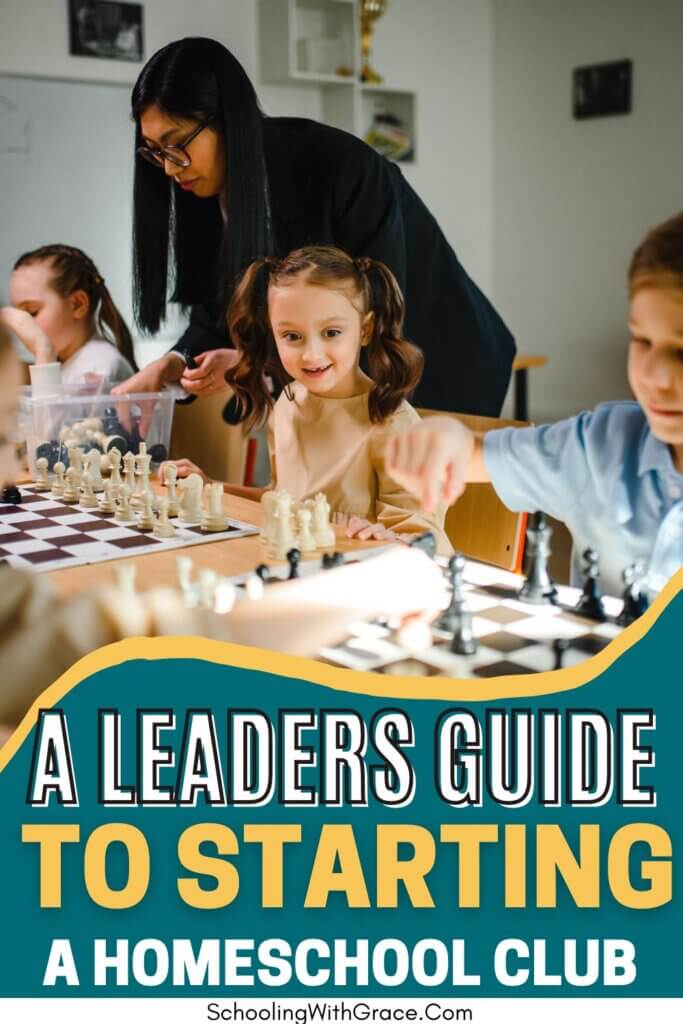
- Chess Club
- Cooking/Baking Club
- Board Game Club
- Film Club
- Lego Club
- Puppetry club
- Running club
- Photography Club
Steps to Starting Your Club
- Define Your Purpose: What are your goals? Who is your target audience? Is this club open to all homeschoolers or just those in your specific community or homeschool group? What will the age/grade limits be for your club?
- Gather Interest: Survey homeschool families to gauge interest and preferences.
- Form a Leadership Team: Recruit parent volunteers or older students to help organize and lead.
- Choose a Meeting Location: Consider homes, churches, libraries, community centers, or parks.
- Set a Schedule: Decide on frequency (weekly, bi-weekly, monthly) and duration of meetings.
- Plan Activities: Brainstorm engaging activities and create a flexible schedule.
- Promote Your Club: Use social media, email, and word-of-mouth to spread the word.
Have you Successfully launched a Homeschool Club with your group? I would love to hear your experience. Share in the comments!
Other Homeschool Co-op and Group Resources
Does your Homeschool Group need Insurance?
How to Host a Homeschool Co-op Open House

Angela is the Homeschool Encourager for the Overwhelmed & Under-Caffeinated and the Chaos-to-Confidence Specialist behind Schooling with Grace. With a no-fluff approach, a dash of humor, and a whole lot of heart, she helps homeschool moms cut through the chaos, ditch unrealistic expectations, and teach with confidence.