
Weather Forecast Activity for Students
This week, we’re diving into a fun and engaging weather forecast activity for students. As educators and parents, we know how much kids are fascinated by the world around them, and weather is no exception. From the first snowflakes of winter to the booming thunder of a summer storm, weather sparks curiosity and wonder in young minds. But have you ever considered harnessing that fascination with your kiddos?
Get ready to transform your students into mini meteorologists as they explore weather patterns, learn about forecasting tools, and make their own predictions! This activity not only teaches valuable science concepts but also encourages critical thinking, problem-solving, and communication skills. So, grab your rain boots and let’s get started!

As an Amazon Associate, we earn from qualifying purchases. This site contains affiliate links see my disclosure here:
What Will Students learn with this Weather Forecast Activity?
- Understand weather patterns: From sunny skies to rainy days, they’ll learn about different weather conditions and how they impact us.
- Become keen observers: They’ll practice making observations and predictions based on real weather data.
- Develop communication skills: Get ready for some adorable weather reports as they present their forecasts to the class.
Related Post: Introduction to Weather: Fun Activities for Kids
What You’ll Need:
- Access to local weather forecasts (online, newspapers, or weather apps)
- Whiteboard or chart paper
- Markers
- Visual aids: Pictures or symbols representing different weather conditions
How to be a Weather Forecaster
Weather Wonders: Start by discussing why it’s important that we predict the weather? How does it affect our daily lives? What are some different weather patterns and how do they affect our daily lives?
Check out this helpful YouTube Video: How do we know when it will rain?
Tools of the Trade: Introduce your students to the fascinating world of weather instruments! Thermometers, barometers, – what do they measure and how do they work? If possible, show students real examples of these tools or pictures of them in action either in person or by the following videos.
Data Detectives: Access your local weather forecast and explore the information together with the information for the next week. Temperature, precipitation, wind speed – record these key details on your whiteboard.

Prediction Power: Divide your class into small groups or pairs. Now it’s their turn to analyze the data and make predictions! Have each group present their weather forecast to the class. Encourage students to explain their reasoning behind their predictions, referring to the weather data they analyzed.
Encourage them to use visual aids to represent their forecasts.- They can use whiteboards or posterboards.
Weather Reporters: Lights, camera, action! Have each group present their weather forecast to the class. Encourage them to explain their reasoning and use the data to support their predictions.
Reflection Time: Track the weather over the next week with student’s predictions. Compare the student forecasts to the actual weather outcome. Was it a hit or a miss? This is a great opportunity to discuss the challenges of weather forecasting and how predictions can sometimes be inaccurate.

Weather Extension Activities:
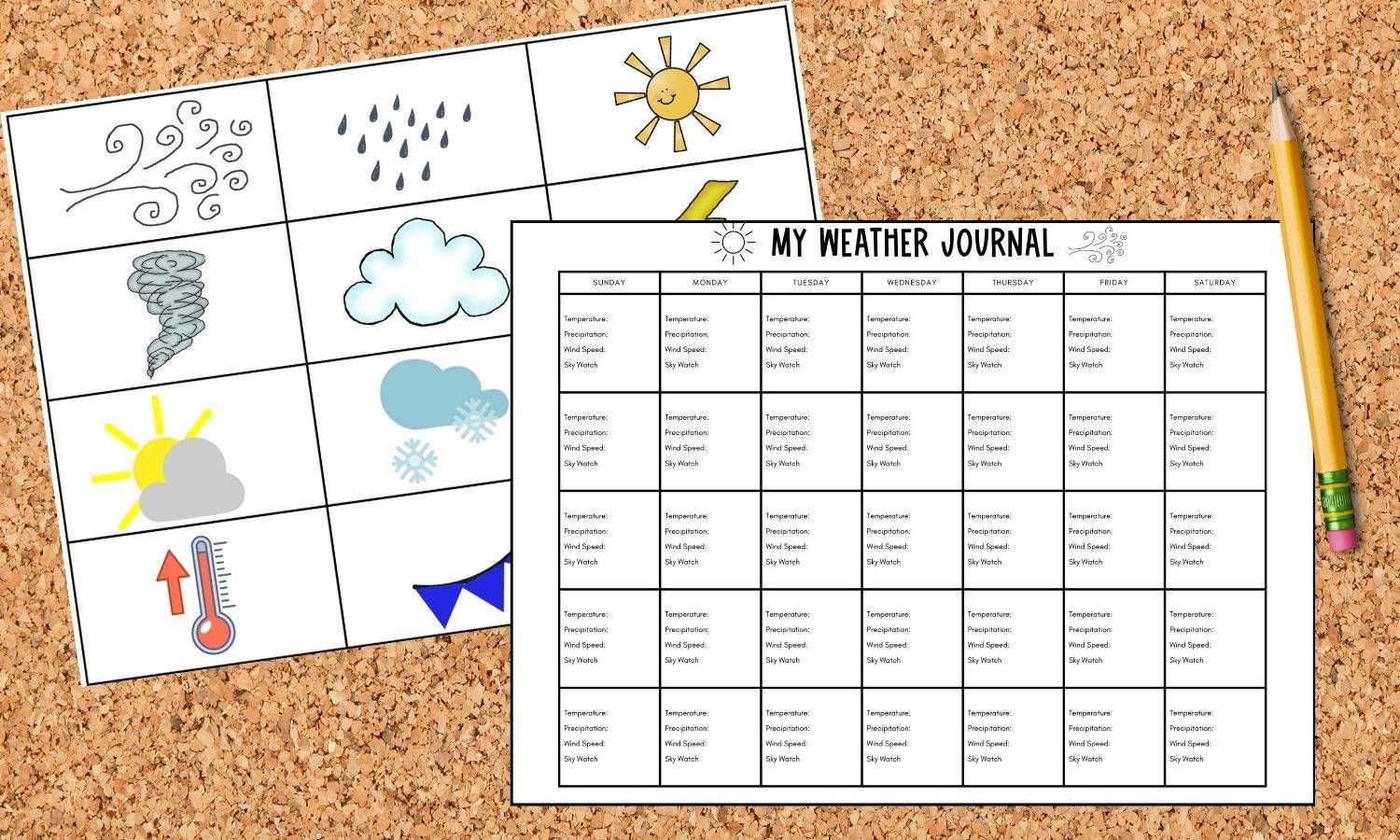
- Create a weather journal where students track daily weather conditions over a period of time.
- Build a simple weather station using basic materials like a plastic bottle, a straw, and some water.
- Research different types of clouds and their associated weather patterns.
Weather Resources
These resources are the perfect companion to your weather forecasting lesson.



Grab the Weather Journal Printable and the Weather Cards Below

Angela is the Homeschool Encourager for the Overwhelmed & Under-Caffeinated and the Chaos-to-Confidence Specialist behind Schooling with Grace. With a no-fluff approach, a dash of humor, and a whole lot of heart, she helps homeschool moms cut through the chaos, ditch unrealistic expectations, and teach with confidence.