
Homeschooling for Beginners: A simple step by step guide
Homeschooling wasn’t something that I ever thought of or believed that I would do prior to having children. In fact, If I’m being honest, I was still unsure all the way up to the first day of kindergarten. It felt right, but I didn’t know anyone doing it and it seemed scary. If you find yourself in that same place, this Homeschooling for Beginners guide will get you started.
1. Know Your State’s Homeschooling Laws
Every state has their own homeschool laws and regulations that vary across state lines. It will be important as you start your homeschooling journey to know what those are. Some states, like the one I live in, have no reporting requirements while others have stricter regulations.
The states with the strictest homeschool regulations generally require more oversight, record-keeping, standardized testing, and curriculum approval. Here are the states typically considered to have the most restrictive homeschool laws:
- Massachusetts
- New York
- Pennsylvania
- Rhode Island
- Vermont
- North Dakota
- Washington
I would recommend checking with the HSLDA (Homeschool Legal Defense Association) website for a state-by-state legal guide to know exactly what your state requirements are.
Related Post: 5 Honest Questions to Ask Yourself before you Begin Homeschooling
2. Get a Basic Game Plan for What Your Child Needs to Learn
If you live in a state with strict curriculum requirements, you will need to start there with your child’s education plan, otherwise, homeschooling offers you a lot of freedom and flexibility when it comes to choosing what curriculum or style of homeschooling you want to do.
Many parents who are used to traditional schooling like to follow what the schools are doing. Dear Homeschool parent, we have freedom to NOT be subject to the schedules and curriculum of the public schools. I would suggest using some of your state’s grade level guidelines as a reference, not as a set of rigid rules.
You can also use resources like:
–Home Learning Year by Year (a book with grade-by-grade expectations).
–The Empowered Homeschool: A complete Guide for ages 3-17
-Online Placement tests from curriculum providers
When choosing curriculum you are going to want to think through what your homeschool style is and how your children learn. This post on Types of Homeschool is going to get you thinking in that direction.
When we started homeschooling, I had visions of being the kind of homeschool parent that spent our days exploring at the park, creating real art, and keeping my children engaged with fantastic science experiments. But as it turned out, each of my children were very different learners. One of them only wanted to work with workbooks and just wanted to be able to check off assignments, while another struggled with reading and math so everything was hands on, and yet another was basically self-taught just through reading.
No homeschool curriculum or method is perfect, and you are not stuck once you choose one. The important thing is that you pick one and you just start.
Pro Tip: If you know other homeschoolers, ask to look at their curriculum, before you consider purchasing your own. We started with a borrowed Sonlight binder full of Kindergarten material, before we ultimately settled on My Father’s World in the early years.
3. Use What You Already Have at Home
One of the common misconceptions is that homeschooling is expensive. The truth is, it’s as expensive as you want it to be. If you are buying whole sets of curriculum the cost can start to add up, although you may find the convenance outweighs the cost.
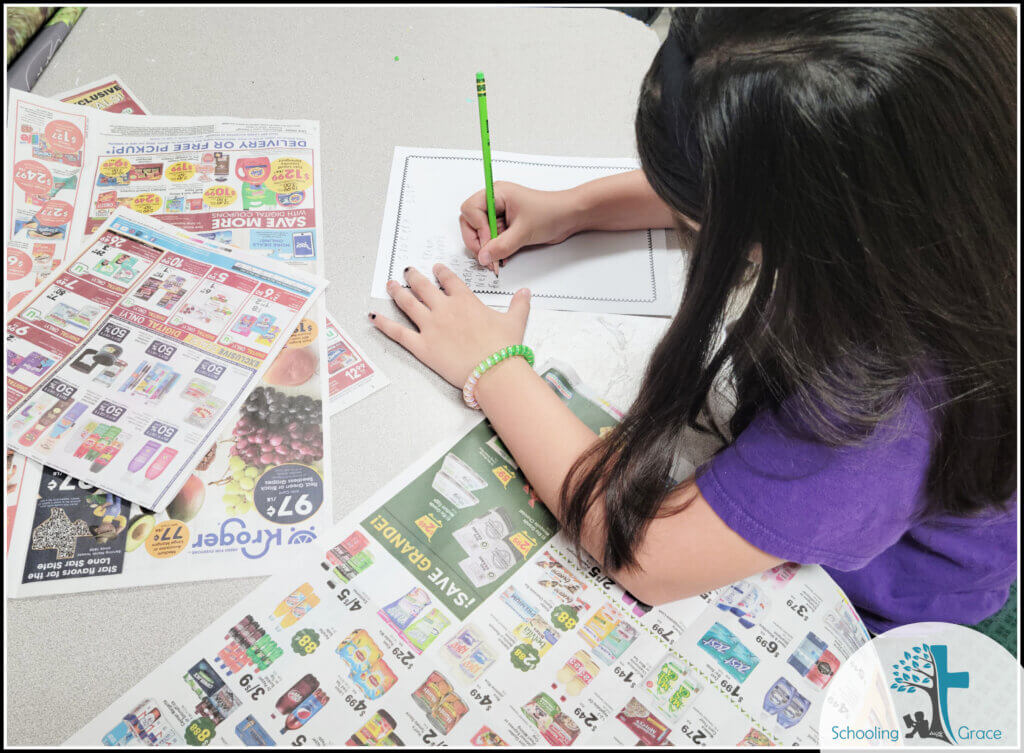
Chances are, you may already own useful learning materials that you can use as you get started. Think about the books, board games, art supplies and puzzles you already have.
Start with small affordable workbooks that can be purchased from Amazon, Costco or Walmart, and as you start to familiarize yourself with your child’s learning style you can make other more specific curriculum choices.
Don’t forget that everyday life is a learning opportunity (cooking = science & math, budgeting = math, reading aloud = literacy boost).
Consider the FREE resources that you already have available to you:
- YouTube (science experiments, math lessons, history documentaries).
- The library (free books and learning activities).
- Online printable worksheets.
Take inventory of all the possible learning resources that you already have before spending money and then fill in the gaps with books, supplies and curriculum as needed. Be creative!
At the beginning of our homeschool journey I asked for memberships to the Zoo and Museums as well gifts of experiences that I could relate back to our homeschool lessons. We took a trip to Medieval Times when we were studying that era and had a blast!
4. Learning Happens Everywhere (Not Just at a Desk)
It takes a different kind of mindset to homeschool, especially if you are used to what public schools. Let me say it again. Your Homeschool doesn’t have to look like public schools.
Children learn best through a mix of hands-on experiences, play and interest-based learning as well as traditional “sit down with a book” school.

All of these can be examples of ways that your school doesn’t have to be done just at a desk. Mix it up with a combination of both structured and unstructured learning.
- Nature walks and discussions.
- Field trips (museums, aquariums, historical sites).
- Educational games (math bingo, word puzzles, trivia).
- Virtual field trips and documentaries.
Start observing how your child naturally learns and begin to incorporate activities that align with their interest and learning style.
5. Connect with the Homeschool Community
Do not Homeschool Alone. I repeat. You shouldn’t homeschool alone. Homeschooling can feel isolating but there are many support systems available to you. Take advantage of the ones local as well as the online groups out there.
Check out:
- Local homeschool Facebook groups (even just for lurking and learning).
- Online homeschool communities.
- Local co-ops, YMCA classes, or homeschool field trip groups.
If the thought of joining a local group causes you to break out into hives, take a deep breath. That is the beauty of online groups. There is sure to be several in your area, and if not- there most definitely are both state and national homeschool groups that you can be a part of. Just remember, homeschooling can be done in isolation but it would be much more effective and fun if you and your children had some friends to join in with.
Conclusion: You Can Do This!
You can do this! You don’t need to be an expert to teach your child, and you don’t need a perfect plan. Start small and adjust as you go, and trust that YOU KNOW YOUR CHILD BEST.
Homeschooling is flexible, if something isn’t working you have the freedom to stop and find something that does.
Other Helpful Posts for Homeschooling
How to Homeschool and Manage a Household
5 Things You’re Doing Wrong as a Homeschooler
Comment below with your biggest homeschooling fear as you start this new chapter
Angela is the Homeschool Encourager for the Overwhelmed & Under-Caffeinated and the Chaos-to-Confidence Specialist behind Schooling with Grace. With a no-fluff approach, a dash of humor, and a whole lot of heart, she helps homeschool moms cut through the chaos, ditch unrealistic expectations, and teach with confidence.