
7 Practical Tips for Homeschooling Multiple Kids successfully
Homeschooling multiple grades can feel like a juggling act—one child needs help with math, another is begging for a read-aloud, and the toddler just spilled a snack all over your lesson plans. Sound familiar? If you’re teaching multiple kids at different levels, you’re not alone! The good news? It is possible to homeschool multiple ages without feeling like you’re drowning in lesson plans and sibling squabbles.
The key is to create a flexible structure that works for your family. Whether it’s using group subjects, encouraging independent learning, or scheduling strategically, the right approach can make your homeschool run smoothly—even with toddlers underfoot.

I’m going to share 7 proven strategies to help you manage homeschooling multiple grades with less stress and more joy.
Use a Block Schedule for Structure & Flexibility
Block Scheduling prevents chaos and gives a predictable rhythm to the day. If you are interested in seeing an example of a homeschool schedule, you can check out this post. The key is routine over schedule.
- How to set it up a block schedule:
- List each child’s daily responsibilities (math, reading, handwriting, independent work, etc.).
- Assign time blocks where kids are doing independent work, sibling time, or one-on-one lessons.
- Example: While one child does independent work, another gets one-on-one instruction, and younger siblings play together.
A block schedule creates order while allowing flexibility for life’s interruptions.
Embrace Sibling Time as a Learning Opportunity

If you have kiddos of different ages, then it’s the perfect opportunity for both to benefit in the learning together. The older kids can reinforce their learning by teaching younger siblings, and younger kids benefit from extra engagement.
- Example: A 7-year-old reading to a 5-year-old—both benefit from literacy exposure.
- Some parents worry about overburdening older kids, but fostering sibling time isn’t about “free childcare”—it’s about building relationships and learning together.
Sibling time strengthens family bonds and enhances learning naturally.
Utilize Group Subjects for Maximum Efficiency
There are several subjects that easily allow you to teach all your children together at the same time. Subjects like history, science, Bible, and art can all be taught together and the children can work at their own level during independent time.
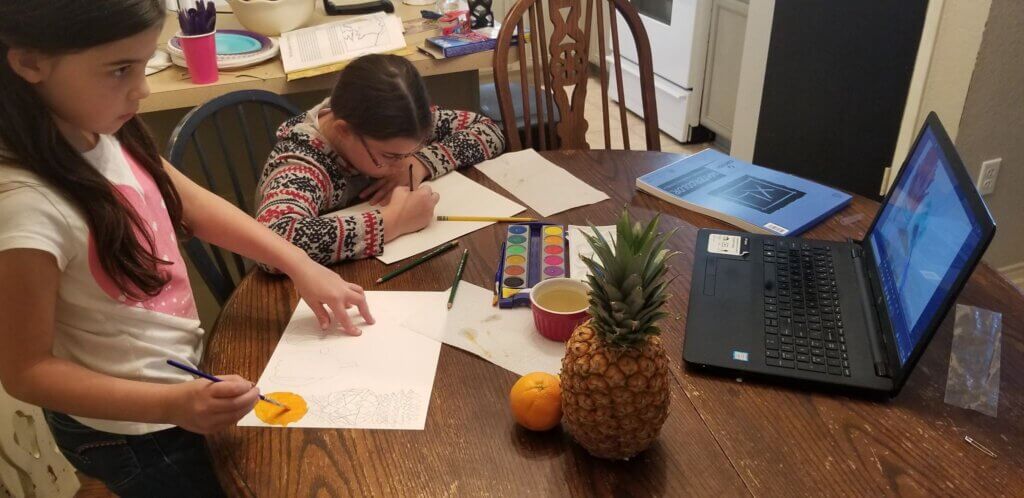
- How it works:
- Example: Using morning time or a morning basket to start the day together.
- We loved using science units from popular curriculum like My Father’s World or The Good and the Beautiful, practicing math facts, or bible verses, and group-friendly history programs.
- Art & nature study: Use videos or multi-level workbooks so everyone can participate at their own level.
Being able to teach your kiddos together as much as possible will save you time and allow you to have those special family moments with deeper discussions.
Choose Curriculum That Works for Multiple Ages
If you are trying to homeschool multiple kids at once then you are going to want to look for curriculum that allows for that. Look for:
- Curricula designed for a range of ages (e.g., science with extensions for older kids).
- Programs that allow for independent learning to ease the parent’s teaching load.
- Heart of Dakota, My Father’s World, The Good and the Beautiful are just a few of the curriculums available that allow for multiple ages to work together. Teaching two children at the same level at once can help streamline instruction and open up more time during the day.
Set Realistic Expectations for Your Homeschool
One of the most common mistakes that homeschoolers (especially newbies) make is trying to mimick the public school system. It’s simply not necessary to try and fit in every subject out there. When our kids were little I focused on the big ones – math and reading. It was easy to fit history, science and art into these two subjects when time was short.
Related Post: 5 Things you are doing wrong as a New Homeschooler
- Here are some ways to prevent the overload:
- Evaluate what’s truly necessary for this season of life.
- Example: Choosing Bible study over a foreign language if time is limited.
- Recognizing that some subjects (like poetry) may already be integrated into subjects like reading, writing or language arts.
Focus on what matters most to you and your family and dial in to those subjects. I really believe that in the early years, we don’t need to focus on everything- your children will not be behind if you didn’t get your science done this week- or even this year. (gasp!) Most learning in the early years will come back around and honestly- they might be able to grasp it more the older they are, instead of trying to just get through it for the sake of checking off a box.
Think Outside the Box with Scheduling
Again, YOUR school doesn’t have to look like everyone else’s. Do what works for your family. I know many families that school in the evening, or on the weekends and many that do year round school and take off a lot of weeks during the school year.
Some ideas/examples:
- Early morning independent work for older kids.
- Evening math lessons with Dad if the day got chaotic.
- Nursing a baby while doing read-alouds with a child.
Setting a routine and being flexible, will be the secret to your success. If you get off schedule, the whole day does not have to be ruined. Homeschooling allows for endless opportunities and flexibility- Use that to your advantage!
Be Flexible, but Keep a Clear Framework
Just another reminder. Your schedule does not rule you. It’s important to have one but don’t be so rigid that a disruption will derail your entire week. If your toddler has a meltdown during math, or you forgot a dentist appointment- just put aside school for the morning or the day and pick it back up later.
Remember: Progress over perfection focus on what is getting done and not on what’s left undone.
You can do this!
Homeschooling multiple grades doesn’t have to be overwhelming—it just takes the right approach and a little flexibility! By implementing block scheduling, using sibling time to your advantage, and incorporating group subjects, you can streamline your homeschool day while fostering meaningful connections between your kids. Choosing multi-age-friendly curricula and setting realistic expectations will help you focus on what truly matters, while creative scheduling ensures that learning fits into your family’s unique rhythm. And above all, flexibility is key—some days will go smoothly, and others will feel chaotic, but that’s part of the homeschooling journey!
Remember, every homeschool looks different, and that’s okay! What works for one family might not work for another, so embrace the strategies that fit your needs and don’t stress about perfection.
Now, I’d love to hear from you! What are your best tips for homeschooling multiple kids? Drop them in the comments below and let’s encourage each other on this journey!

Angela is the Homeschool Encourager for the Overwhelmed & Under-Caffeinated and the Chaos-to-Confidence Specialist behind Schooling with Grace. With a no-fluff approach, a dash of humor, and a whole lot of heart, she helps homeschool moms cut through the chaos, ditch unrealistic expectations, and teach with confidence.