
Homeschool Schedule Ideas
Homeschooling offers incredible flexibility, but with that freedom comes the challenge of creating structure. If you are looking for Homeschool Schedule Ideas, the important thing to note is that a well-crafted homeschool schedule isn’t about rigid time blocks; it’s about establishing a rhythm that supports learning, minimizes chaos, and allows everyone to thrive.
If you have a type A personality, you probably already have a handle on your family’s schedule and you’re just here for some reassurance, but if you are anything like me- the idea of a strict schedule is stifling. That’s why I prefer to have a “routine” instead of a schedule. Routines allow you to get back on track if the day doesn’t go as planned.

Homeschool Schedule Ideas: Finding Your Family’s Rhythm
The Power of Routines (and Why They’re Not the Enemy)
Routines often get a bad rap, but they’re the unsung heroes of a smooth-running homeschool. They provide a sense of predictability and security, especially for children. Knowing what to expect throughout the day can reduce anxiety and make transitions easier. Routines also free up mental energy. When daily tasks become habitual, you and your kids spend less time negotiating and more time learning.
Related Post: Creating a Morning Routine that Sets the tone for the Day
Think of your schedule as a framework, not a rigid set of rules. It should be flexible enough to accommodate unexpected events and individual needs. The key is to find a balance between structure and spontaneity.
Keeping Those Little Learners (and Big Learners!) on Track
Let’s be honest, even the best-laid plans can go awry. Here are some strategies to help keep your homeschool day on track:
- Visual Schedules: For younger children, visual schedules using pictures or symbols can be incredibly helpful. They provide a clear representation of the day’s activities and can empower kids to manage their own routines.
- Timers: Timers are your best friend! Use them to signal the start and end of activities, helping children (and you!) stay aware of time. A visual timer can be especially useful for younger children who are still learning to tell time.
- Checklists: Checklists are great for breaking down larger tasks into smaller, more manageable steps. They can also provide a sense of accomplishment as children check items off their list.
- Designated Spaces: Having designated spaces for learning, playing, and eating can help minimize distractions and keep things organized.
- Involve Your Kids: Collaborate with your children when creating the schedule. This gives them a sense of ownership and makes them more likely to cooperate.
- Gamify It: Turn tasks into games! This can make learning more fun and engaging, especially for younger children.
Related Post: How to Keep your Easily Distracted Student Engaged
Homeschool Schedule Ideas
If you are looking for some sample schedules, here are a few that have worked for our family over the years.
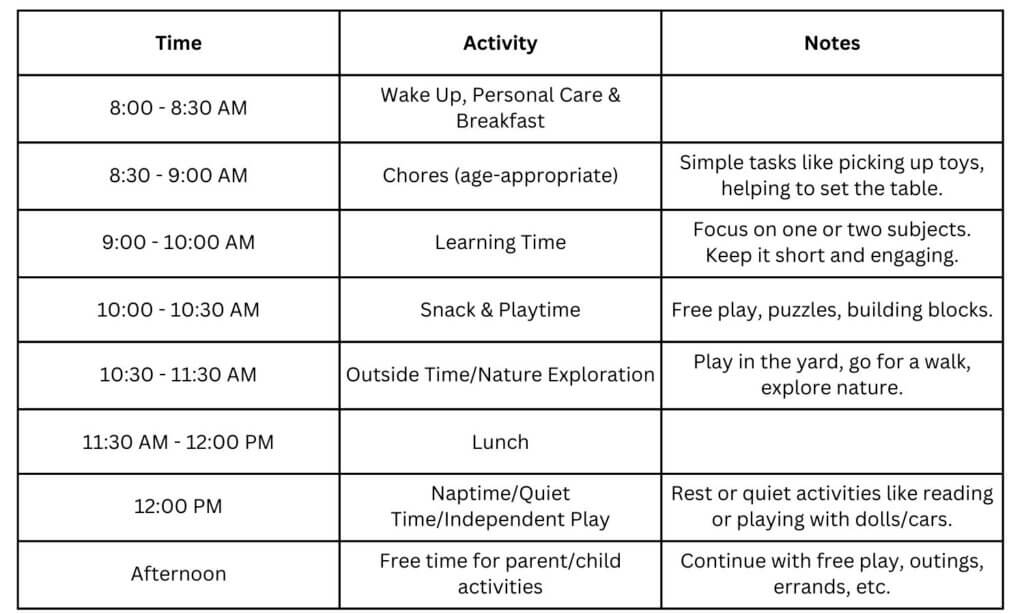
Example Schedule For younger students:
The is a sample schedule, to turn this into a routine, simply remove the times and work at the pace that is set by your lifestyle.
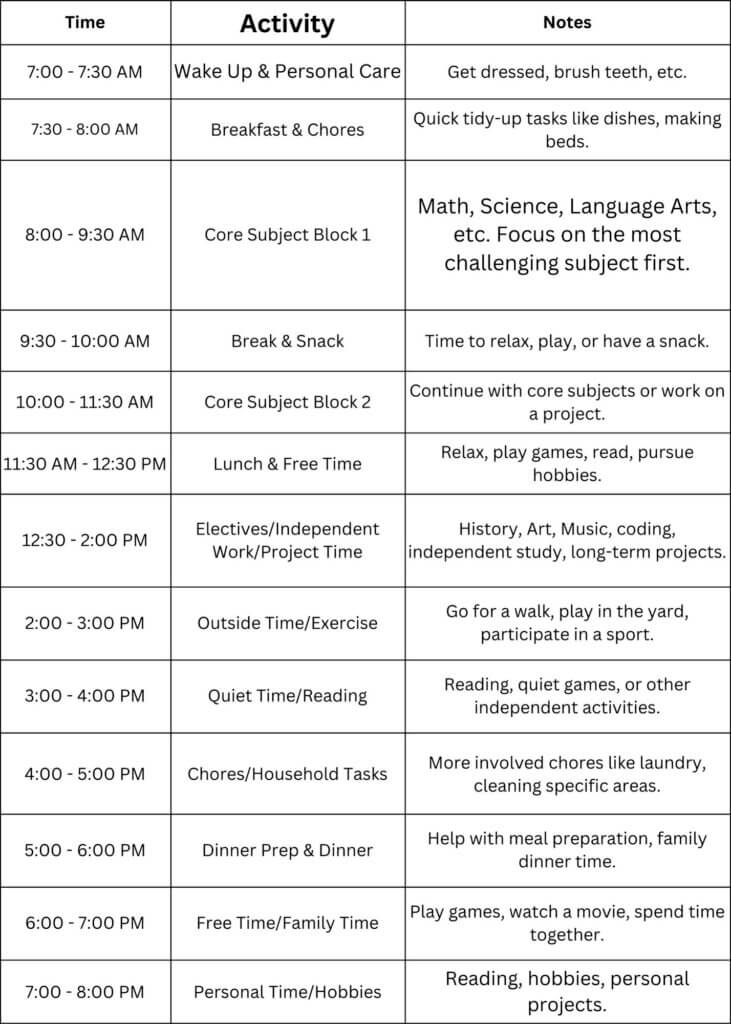
Example Schedule for Older Students:
Uh Oh! We’re Off Schedule! Now What?
It happens to the best of us. A doctor’s appointment runs late, a child has a meltdown, or you simply need a mental health day. Don’t panic! Here’s how to handle it:
- Acknowledge and Adjust: Acknowledge that things haven’t gone according to plan and adjust the schedule accordingly. Maybe you need to shorten a subject block or postpone an activity to another day.
- Prioritize: Identify the most important tasks for the day and focus on those. It’s okay to let less important things slide.
- Don’t Dwell: Don’t beat yourself up about getting off schedule. Just pick up where you left off and move forward.
- Embrace Flexibility: Remember, homeschooling is all about flexibility. Be prepared to adapt and adjust as needed.
The Importance of Breaks (For Everyone!)
Homeschooling can be intense, both for you and your children. Regular breaks are essential for your sanity, preventing burnout and maintaining focus. Make sure to schedule breaks throughout the day for snacks, playtime, outdoor activities, and quiet time. And don’t forget to schedule breaks for yourself! A happy and rested homeschool parent is a much more effective one.
Finding Your Rhythm
Creating a homeschool schedule is a process of trial and error. What works for one family may not work for another. Be patient with yourself and your children as you find your rhythm. Remember, the goal is to create a schedule that supports your family’s unique needs and allows everyone to learn and thrive. Don’t be afraid to experiment and adjust until you find what works best. And most importantly, remember to enjoy the journey!

Angela is the Homeschool Encourager for the Overwhelmed & Under-Caffeinated and the Chaos-to-Confidence Specialist behind Schooling with Grace. With a no-fluff approach, a dash of humor, and a whole lot of heart, she helps homeschool moms cut through the chaos, ditch unrealistic expectations, and teach with confidence.