
Little Boy Blue; Rhyming Activities for Preschoolers
Nursery rhymes have been a cherished part of childhood for generations, offering a wonderful way to introduce young children to the world of language, rhythm, and rhyme. “Little Boy Blue” is one such classic nursery rhyme that has delighted kids with its whimsical storytelling and catchy verses. In this post, we’ll dive into the enchanting world of Little Boy Blue and explore a series of creative and engaging rhyming activities that you can use to enhance your child’s language development and have a whole lot of fun together.
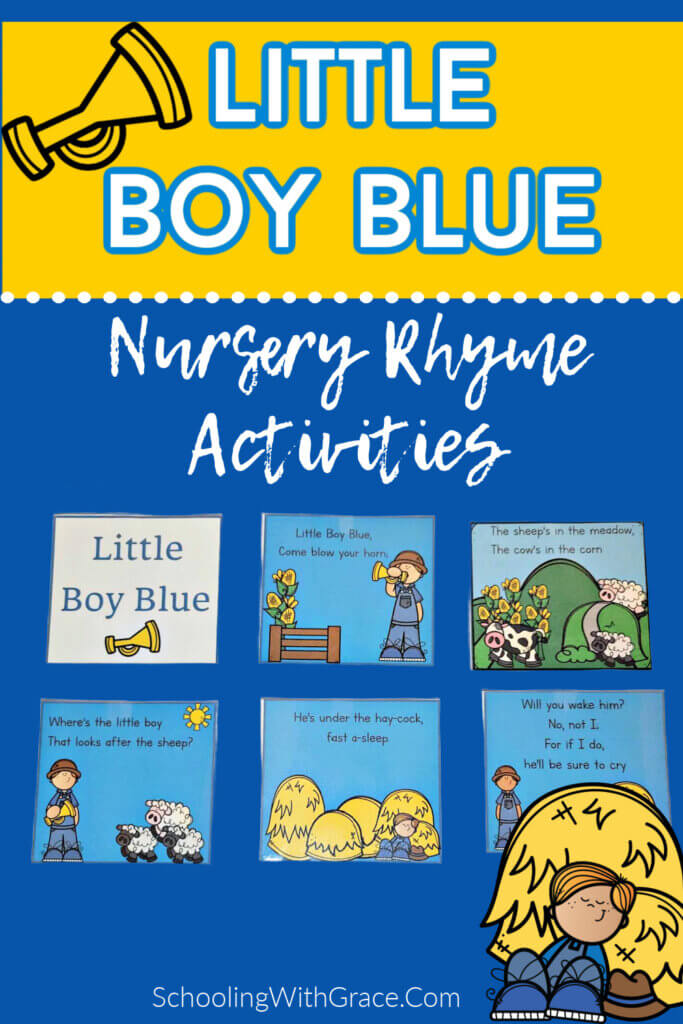
Little Boy Blue
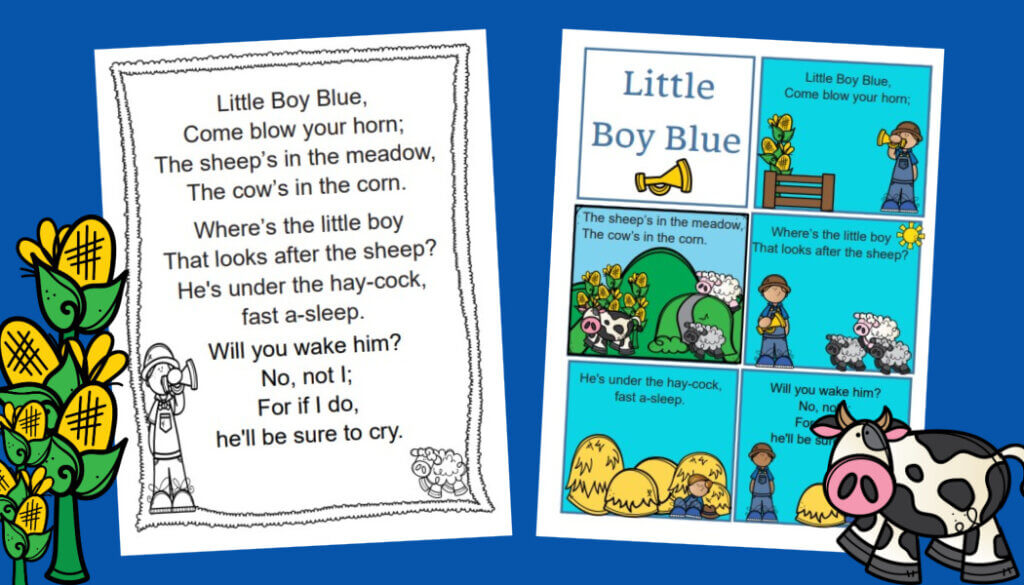
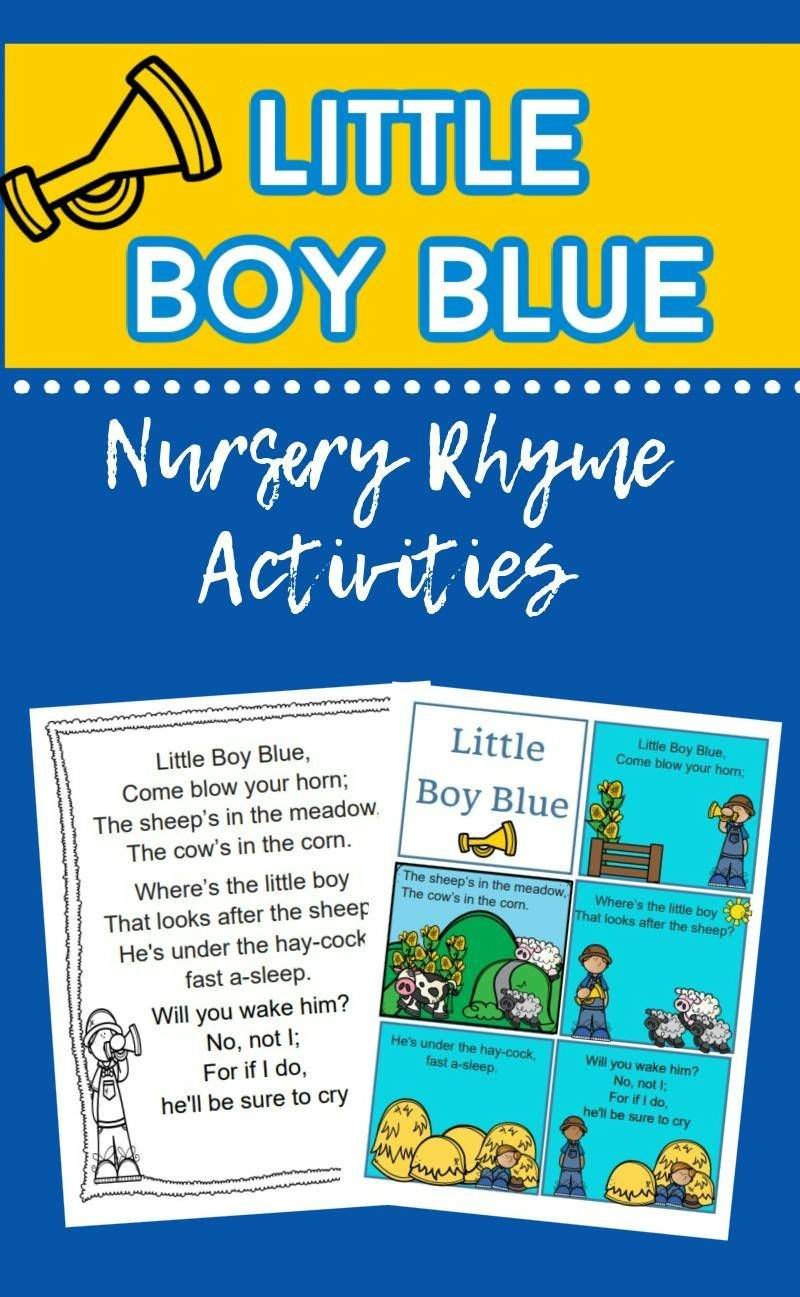
Little Boy Blue, come blow your horn,
The sheep’s in the meadow, the cow’s in the corn.
Where is the boy who looks after the sheep?
He’s under the haystack, fast asleep.
Will you wake him? Oh, no, not I; For if I do, he’ll be sure to cry.
This delightful rhyme tells the story of Little Boy Blue, a young shepherd who has fallen asleep on the job, leaving the sheep and the cow to roam freely. The rhyme concludes with the playful question of whether we should wake him up, to which the response is “Oh, no, not I; for if I do, he’ll be sure to cry.”
Activities to Teach Rhyming
Rhyme Hunt
Engage your child in a fun and educational rhyme hunt! Collect a few nursery rhyme books or printouts of nursery rhymes, including “Little Boy Blue.” Read the nursery rhymes together, emphasizing the rhyming words in each. Then, give your child a highlighter or a colored pencil and ask them to find and underline the rhyming words in each rhyme. This activity will help your child recognize rhyme patterns and improve their phonemic awareness.
Create Your Rhyme
Encourage your child to get creative by composing their own nursery rhyme. Start by discussing some simple topics or themes like animals, nature, or everyday activities. Then, brainstorm a list of rhyming words related to the chosen theme. With these rhyming words as a foundation, work together to craft a short nursery rhyme. Your child can either write it down or express it orally. This activity not only enhances your child’s rhyming skills but also encourages their creativity and storytelling abilities.
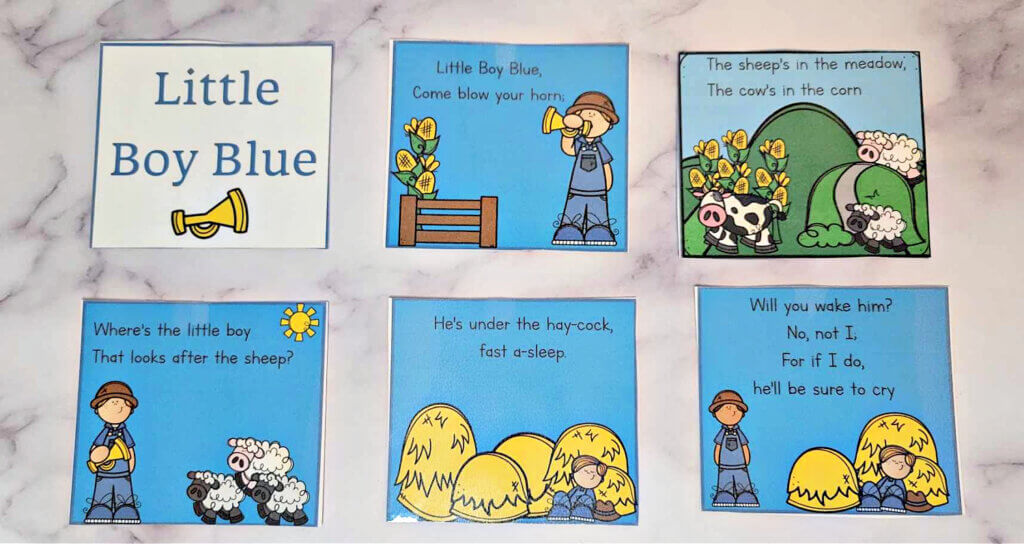
Story Sequencing
Teach rhyming by reading through nursery rhymes and pointing out rhyming words. You can also teach story comprehension and practice memory by placing the story in order.
Rhyming Games
Create rhyming puzzles using picture cards. Find or create picture cards that represent rhyming words (e.g., cat, hat, bat, and mat). Place the cards face down and ask your child to turn over two cards at a time, trying to match the rhyming pairs. You can make this game more challenging by adding more cards and increasing the difficulty level. Rhyming puzzles help children solidify their understanding of rhyming words and develop their memory and cognitive skills.
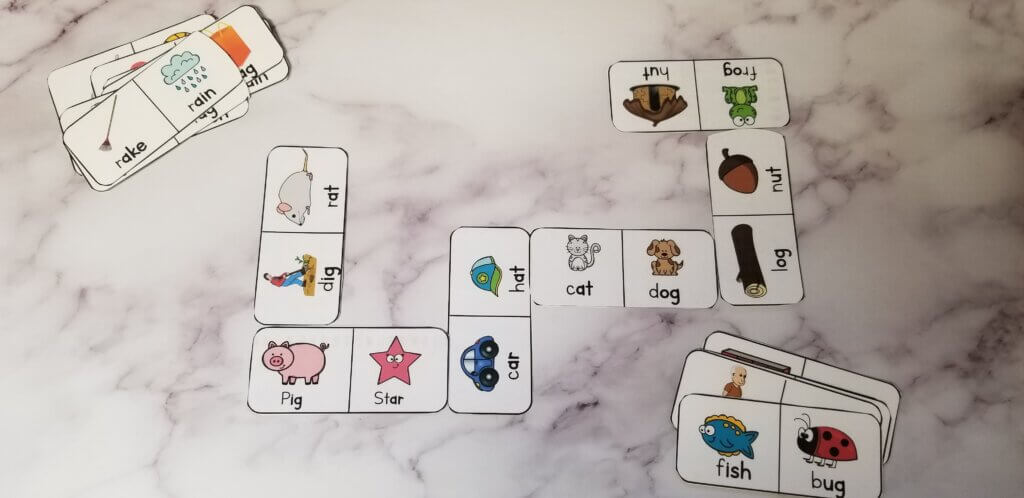
Rhyming Dominoe’s is another fun game that helps students practice rhyming words. Students will work to match up pictures with the same ending sounds.
Rhyme Time Song
Transform the nursery rhyme into a song. Sing “Little Boy Blue” together with your child and emphasize the rhyming words in each line. Encourage your child to sing along and get creative by making up their own verses using rhyming words. You can even use musical instruments or create simple hand movements to make it more interactive. Singing nursery rhymes is a wonderful way to introduce children to rhythm, melody, and rhyme simultaneously.
Rhyming Scavenger Hunt
Take the rhyme hunt concept outdoors with a rhyming scavenger hunt. Create a list of objects, animals, or items that rhyme with words from the nursery rhyme. For example, you could include items like a horn, a meadow, a haystack, a cow, and more. Then, go on an adventure in your backyard or local park, searching for these items while reciting the nursery rhyme. This activity combines physical exercise with language development, making it a fantastic learning experience.
Rhyming Storytime
Extend the fun of nursery rhymes into story time by reading rhyming storybooks. Select books with captivating rhyming schemes and read them aloud with enthusiasm. Afterward, have a discussion with your child about the rhyming words in the story. Ask them to identify the rhyming pairs and discuss the story’s plot and characters. This activity enhances their comprehension and listening skills while reinforcing rhyming concepts.


Nursery rhymes like “Little Boy Blue” offer a wonderful opportunity to introduce children to the world of language, rhythm, and rhyme. By engaging in the rhyming activities, you can make learning fun and enjoyable for your student. T
Grab the whole Nursery Rhyme Bundle here


Angela is the Homeschool Encourager for the Overwhelmed & Under-Caffeinated and the Chaos-to-Confidence Specialist behind Schooling with Grace. With a no-fluff approach, a dash of humor, and a whole lot of heart, she helps homeschool moms cut through the chaos, ditch unrealistic expectations, and teach with confidence.
Where can I get your Little Boy Blue rhyming dominoes game?
Hey Tammera, The domino game is part of the Rhyming Time resource that you can find in my shop or can also be found in my Raising Readers Unit 2 curriculum.
Hope that helps!