
Vocabulary Building Activities
I love words, always have. When I was a teacher in the classroom, we would do “word of the day” challenges. We have always played games like Vocabulary Charades and Word Wizard along with other vocabulary building activities to keep them engaged and excited about learning new words.
Helping children expand their vocabulary is one of the most powerful ways to improve reading comprehension, writing skills, and overall communication. A rich vocabulary gives students the tools to express themselves clearly and understand the world around them. But drilling word lists can get old fast. That’s why incorporating hands-on, meaningful vocabulary activities can make all the difference.
This post is part of my 10 Days of Language Arts Series. Check the Rest out Here.

As an Amazon Associate, we earn from qualifying purchases. This site contains affiliate links see my disclosure here:
How do Students Learn New Vocabulary Best?
Students learn new vocabulary words best when they encounter them multiple times and in meaningful contexts. Simply memorizing a list of definitions isn’t enough—real learning happens when words are connected to experiences, visuals, emotions, or stories. Using a combination of hearing, seeing, saying, and using the word helps it stick.
For example, when a student reads a word in a story, hears it during a discussion, and then uses it in their own writing, it becomes part of their working vocabulary. Engaging activities, repetition over time, and student-friendly explanations also play a key role in helping new words move from short-term Rememory to long-term use.
Vocabulary Building Activities:
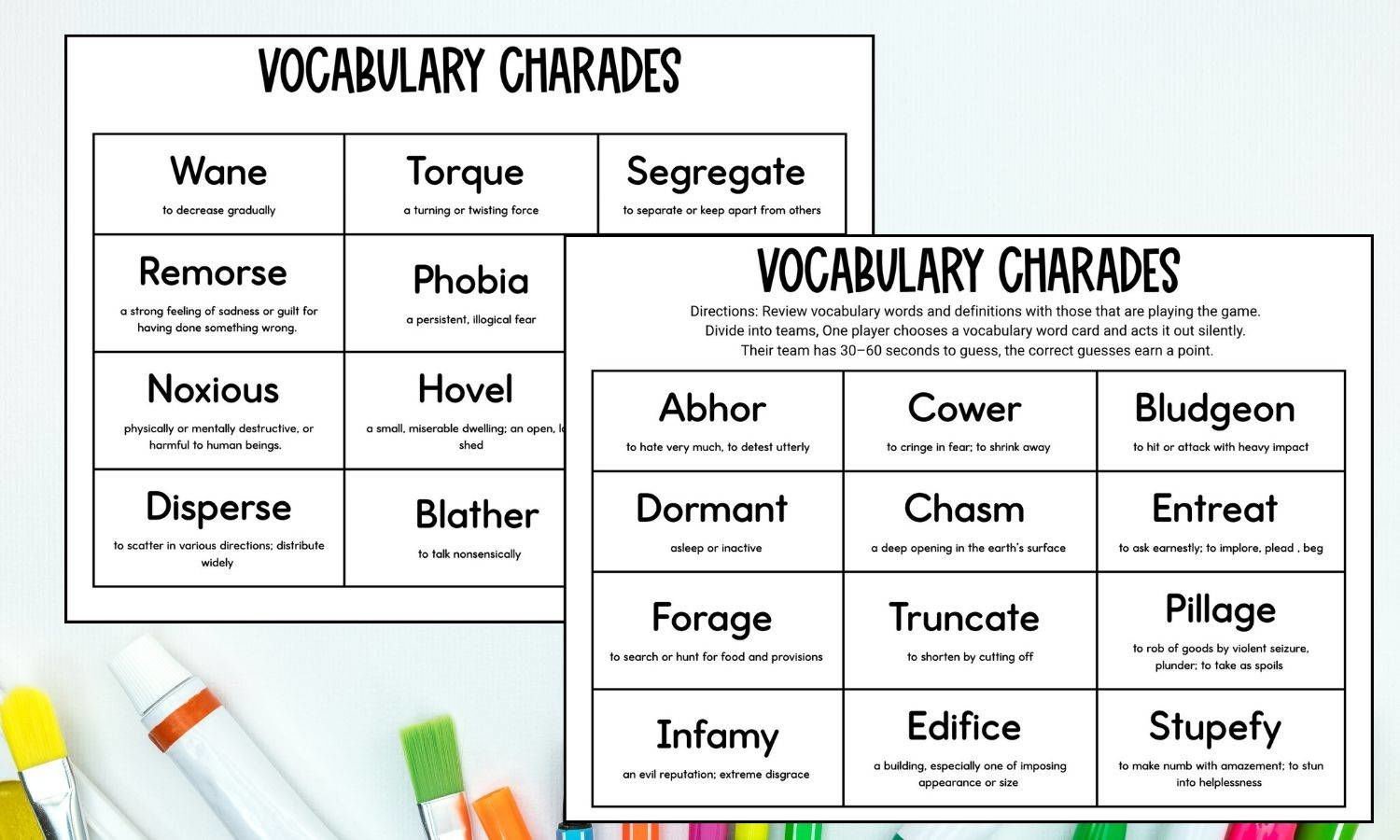
Vocabulary Charades (Grab the Printable Below)
Turn vocabulary into a game by having students act out their words while classmates guess. This helps kinesthetic learners associate meaning with movement. It’s also a great way to break up the day with laughter and physical activity. Bonus: it reinforces word meaning without feeling like “work.”

Word Maps
Create graphic organizers where students define the word, use it in a sentence, draw a picture, list synonyms and antonyms, and write what part of speech it is. This deepens understanding and helps students build connections between words. Word maps can be created by hand or with digital tools.
Related Post: More Methods to teach Vocabulary
Vocabulary Journals
Encourage students to keep a personal vocabulary journal. Every time they learn a new word, they write it down, define it in their own words, and record where they found it (in a book, during a conversation, etc.). They can revisit these words weekly and use them in their own writing.
Context Clues Scavenger Hunt
Challenge students to find new or challenging words in the books they’re reading. Then, have them use context clues to guess the meaning before checking the dictionary. This strengthens inferencing skills and shows students that learning new words can happen naturally during reading.
“Word of the Day” Routine
Start each morning with a new vocabulary word. Discuss the meaning, use it in a few example sentences, and encourage students to use it throughout the day. You can even set up a “word watch” challenge where students try to catch each other using the word in conversation.
Sentence Surgery
Give students poorly written sentences using vocabulary words (run-ons, fragments, or misused words). Their job? Fix the sentence so the vocabulary word is used correctly. This activity builds grammar and usage skills alongside vocabulary.

Check out this Sentence Surgery Activity Here!
Matching Games and Memory
Create cards with vocabulary words and their definitions (or synonyms, antonyms, or pictures). Use them to play memory games, match-up races, or Go Fish-style review. These simple games reinforce vocabulary in a low-pressure, high-reward way.
Mistakes to Avoid in Vocabulary Instruction
One of the biggest mistakes in teaching vocabulary is overwhelming students with too many words at once. When students are given long lists to memorize without context or connection, they’re more likely to forget them quickly.
Another common pitfall is teaching words in isolation—without showing how they’re used in real sentences or situations. Vocabulary sticks best when it’s tied to meaning and use, not just rote memorization. Relying only on definitions or flashcards without providing opportunities for discussion, practice, and application limits true understanding. To build a lasting vocabulary, words need to be revisited often and used in varied and meaningful ways.
Vocabulary Resources
Vocabulary learning doesn’t have to be a chore, check out these resources.


Grab The Vocabulary Charades Printable Below

Angela is the Homeschool Encourager for the Overwhelmed & Under-Caffeinated and the Chaos-to-Confidence Specialist behind Schooling with Grace. With a no-fluff approach, a dash of humor, and a whole lot of heart, she helps homeschool moms cut through the chaos, ditch unrealistic expectations, and teach with confidence.